
Kyle James
September 3, 2026
How We Match the Right Person to the Right Role
Expertise & Education
Anyone can fill a seat. Filling it with the right person, someone who has the skills, shows up reliably, fits the environment, and stays, is a craft. It is also the entire point of working with a staffing partner rather than posting a job ad and hoping. This is a look inside how On Target Staffing actually matches the right person to the right role, and why that process, not luck, is what separates a placement that sticks from one that unravels in week two.
Why “Available” Is Not the Same as “Right”
The fastest way to fill an order is to send whoever is available. It is also the fastest way to create turnover. Availability tells you someone can start; it tells you nothing about whether they will succeed. A true match weighs three things availability ignores: whether the person can do the work, whether they will do it reliably, and whether they fit the place they are walking into. Miss any one and the placement is fragile, no matter how quickly it was made.
Step 1: Understanding the Role Beyond the Job Title
A job title is a label, not a description. “Warehouse associate” means something different in a high-volume e-commerce fulfillment center than in a temperature-controlled food facility. So the process starts with the operation, not the requisition. We learn the physical demands, the equipment, the pace, the shift structure, the safety requirements, and, critically, what makes someone succeed or fail in that specific environment.
- The real skills and certifications the role requires, not just the ones on the posting.
- The physical and environmental demands: lifting, standing, cold, heat, noise, pace.
- The schedule reality: shifts, overtime, seasonality, attendance expectations.
- The culture and supervision style the person will actually work within.
Step 2: Understanding the Person Beyond the Resume
A resume is a starting point, not a verdict. On Target Staffing takes the time to understand a candidate’s experience, their goals, and the kind of work environment where they will thrive, because a skilled worker placed in the wrong environment will leave, and a motivated worker placed in the right one will stay and grow. We look past the document to the person: their reliability history, what they are actually good at, what they want next, and where they will do their best work.
Step 3: The Match, Skills, Reliability, and Fit
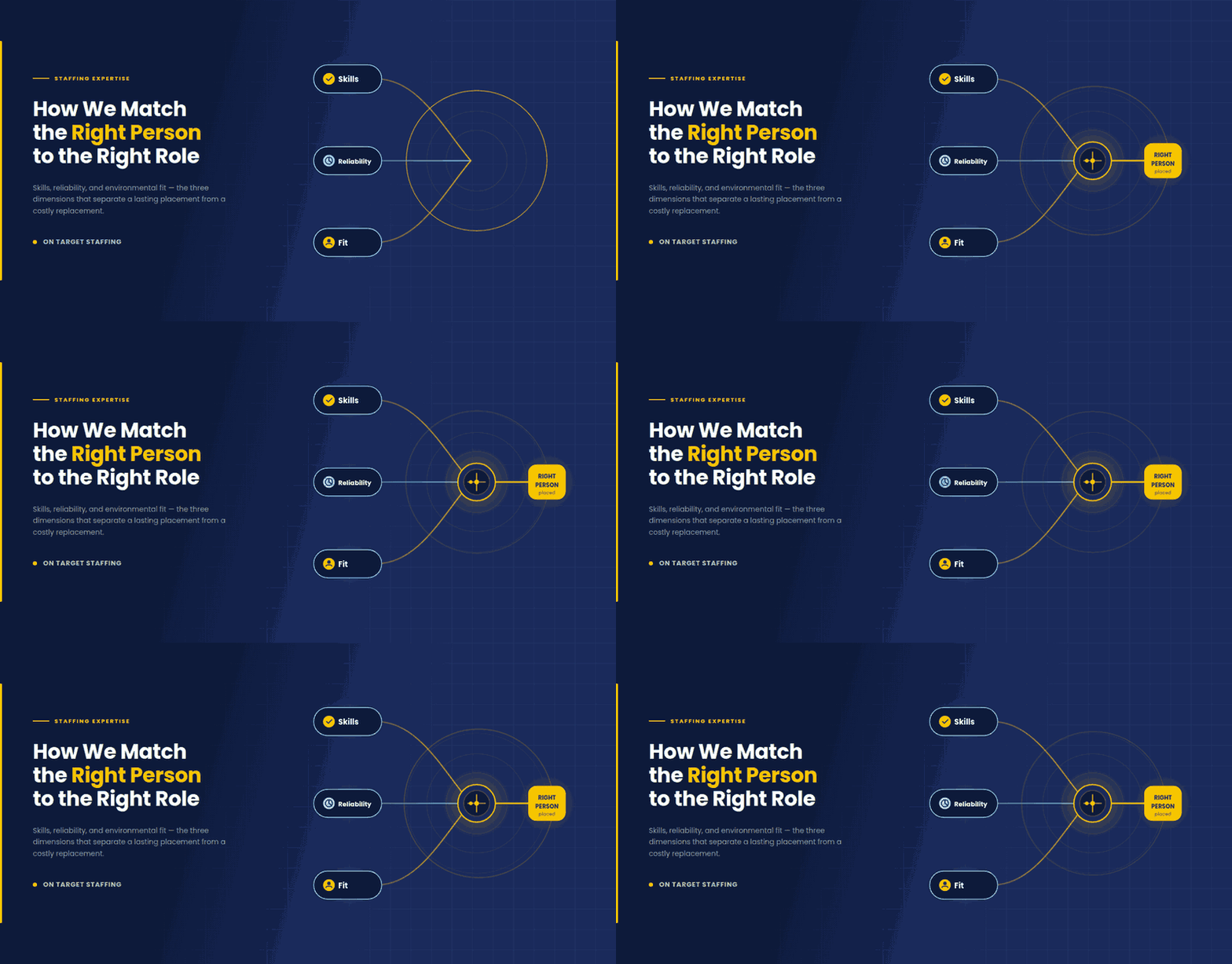
The match itself is the intersection of three questions, and all three must be yes.
| Dimension | The question | Why it matters |
|---|---|---|
| Skills | Can they do the work to standard? | Prevents rework, safety issues, and missed output |
| Reliability | Will they show up and perform consistently? | Attendance and dependability drive real throughput |
| Fit | Will they thrive in this environment? | Fit is the strongest predictor of retention |
In light-industrial and logistics roles especially, reliability and fit often outweigh a marginally stronger skill set, because a highly skilled worker who quits in two weeks costs more than a solid one who stays for the season. Matching for retention, not just for the first shift, is what protects both the employer’s output and the worker’s momentum.
Want placements that actually stick?
Tell Us About the Role You Need to FillStep 4: Confirming the Fit on the Job
A match is a hypothesis until the work confirms it. That is why placements are backed by oversight and ongoing performance monitoring rather than a hand-off and silence. For temp-to-hire roles, the trial period is a live fit test: the employer evaluates real performance before converting, and we stay close to both sides to catch and correct friction early. When something is not working, a promise-driven partner fixes it fast rather than defending the original submission.
The Metrics That Prove a Match Worked
Good matching is measurable. The signals that a placement was truly right, not just fast, include the following.
- Fill rate and time-to-fill, speed, but never at the expense of the next three.
- Retention and assignment completion, did the person stay and finish?
- Conversion rate, how often temp-to-hire associates earn a permanent offer.
- Redeployment, do great associates get placed again, a sign the match model works.
- Client satisfaction and repeat requests, the ultimate proof the match delivered.
On Target Staffing tracks both sides of the equation: speed and throughput, and outcomes like retention and satisfaction. That dual focus is deliberate. Speed alone is easy to fake; a match that lasts is not. Doing both is the expertise, and it is why matching the right person to the right role is a service, not a coincidence.
Frequently Asked Questions
How does a staffing agency match candidates to jobs?
A strong staffing agency matches candidates by first understanding the role beyond its title, then understanding the person beyond their resume, and finally aligning three dimensions, skills, reliability, and environmental fit, before confirming the match through on-the-job performance.
Why is fit as important as skills in a placement?
Fit is the strongest predictor of retention. A skilled worker placed in the wrong environment tends to leave quickly, which costs more than placing a solid worker who stays, so matching for fit protects both output and long-term reliability.
How does On Target Staffing ensure a placement will last?
On Target Staffing matches for reliability and fit, not just availability, backs placements with oversight and ongoing performance monitoring, and uses temp-to-hire trial periods to confirm the match before permanent conversion.


